Essential Steps to Take After an Auto Accident
A sudden motor vehicle accident is a jarring, high-stress event that instantly disrupts your life. In the immediate aftermath, the intense surge of adrenaline can cloud your judgment, making it easy to overlook vital protective measures. Whether you have experienced a high-speed highway crash or a low-speed parking lot bumper rub, the immediate decisions you make can dramatically influence your physical health, your legal standing, and your household finances. Too many drivers make critical errors in the chaotic hours and days following a collision, mistakenly assuming that because their vehicle looks operational, no major intervention is required.
Ignoring hidden mechanical strain, unmapped structural twists, or soft-tissue bodily injuries that worsen days later is a recipe for long-term physical pain and denied financial claims. The modern vehicle is a highly complex, interconnected network of progressive crumple zones and electronic systems, much like the human body is an integrated system of skeletal and soft-tissue alignments. Navigating an auto accident successfully requires a disciplined, phase-based recovery strategy that prioritizes immediate physical triage, comprehensive structural vehicle restoration, and meticulous administrative tracking to safeguard your physical well-being and your finances.
Prioritize Physical Triage and Soft-Tissue Structural Care
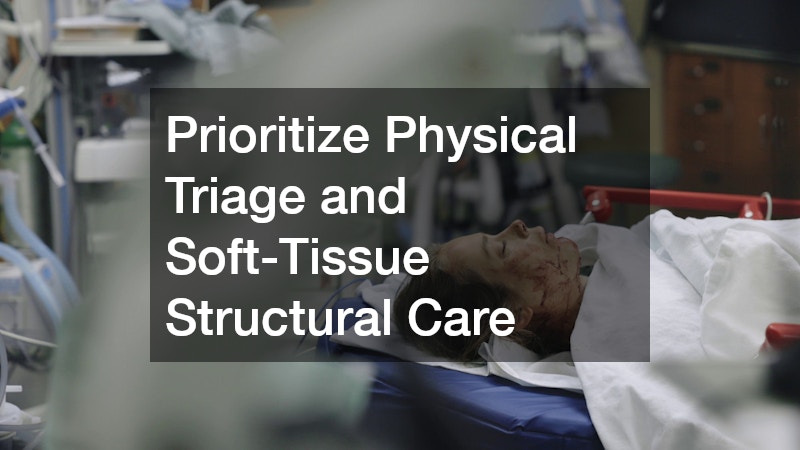
The moments directly following a collision must be treated with absolute clinical discipline. Your priority is to secure the physical safety of your environment by moving your vehicle to the shoulder of the road, activating your hazard flashers, and calling emergency dispatchers. Once the immediate scene is safe, you must carefully evaluate all passengers for visible injuries. However, the true medical danger following an auto accident often involves hidden, latent traumatic impacts. The sudden deceleration forces of a low-speed impact push your neck and spine through an unnatural, whip-like motion, stretching ligaments and misaligning vertebrae while your body’s survival responses temporarily block the pain.
Waiting several weeks to see a doctor allows scar tissue to form incorrectly around misaligned joints, which can lead to chronic pain and give insurance adjusters a reason to deny your injury claim. To catch these hidden soft-tissue injuries before they cause long-term damage, you should schedule a specialized spinal assessment with an authorized auto accident injury chiropractor. A dedicated auto accident injury chiropractor will execute precise diagnostic checks, order targeted spinal imaging, and implement non-invasive adjustments to realign your skeletal framework, reduce tissue inflammation, and safely document your physical recovery for your insurance claim file.
- Document any physical symptoms, like neck stiffness, headaches, or lower back pain, in a daily journal starting immediately after the accident.
- Avoid engaging in heavy lifting or strenuous exercise until a medical professional has thoroughly evaluated your spinal health.
- Request a full copy of your diagnostic reports and treatment plans to maintain a pristine, independent record for your legal files.
Manage Primary Communications and Navigate Insurance Appraisal Pipelines

With your physical safety and initial medical care path secured, your operational focus must shift to managing your legal obligations and opening your insurance claims. Every auto policy features strict reporting windows that require policyholders to report accidents quickly. Delaying your initial notification can give your insurer a legal window to limit your coverage or deny your claim entirely, leaving your household to cover thousands of dollars in vehicle repairs out of pocket.
When you contact your automobile insurance company to open a claim, you must communicate with absolute clarity and precision. It is vital to stick strictly to the objective facts of the scene, such as the date, time, and location of the crash, while avoiding any casual guessing about fault or vehicle damage before a professional technician can inspect the car. Demanding a comprehensive, formal appraisal from your automobile insurance company ensures they account for deep-set sub-frame stress rather than relying on a quick visual glance, protecting your financial position throughout the claim process.
- File your initial accident report within twenty-four hours to ensure you comply with all standard policy notification guidelines.
- Take clear photographs of all vehicle identification numbers, license plates, and insurance cards at the scene to prevent administrative errors.
- Request a dedicated, written copy of your insurance company’s independent repair estimate to compare it against your independent technician’s quote.
Execute Comprehensive Mechanical Audits and Electronic System Refinements
Modern automobiles are built around advanced computer networks that connect your engine, transmission, and braking modules to dozens of sensitive electronic sensors. When your vehicle suffers an impact, these internal networks absorb a massive amount of kinetic force. Even if your car appears to drive fine on the ride home, hidden electrical wiring shorts, hairline fluid leaks, or cracked mechanical mounts can quickly develop into catastrophic failures if left uninspected.
To uncover these hidden mechanical issues before they leave you stranded on the highway, you must book an intensive diagnostic audit with a certified auto mechanic. A professional auto mechanic will connect high-tier scan tools to read internal error codes, verify that your supplemental restraint systems and airbags are online, and inspect your engine mounts for structural stress cracks under pressure. Your technician will also check your core fluid lines, ensuring your engine cooling loops and brake lines suffered zero microscopic leaks from the impact force.
- Run a complete computer diagnostic check to scan for hidden electrical system faults or failing safety sensors behind the bumpers.
- Inspect the structural engine and transmission mounts to confirm they did not crack or shift during the sudden stopping force.
- Pressure-test your vehicle’s cooling system to check for hairline radiator cracks or loose heater hose connections.
While having a master mechanic audit your engine bay handles your primary drivetrain requirements, you must also check your vehicle’s secondary interior electronics and entertainment networks. The intense physical force of an accident can easily stretch wiring harnesses, break internal mounting brackets, and short out complex electronic circuit boards hidden inside your dashboard. To restore your cabin’s interior systems completely, you should take your vehicle to a specialized provider of car audio services. Trusting an expert team that delivers professional car audio services ensures that your interior speaker lines, touchscreen infotainment units, and integrated navigation sensors are thoroughly tested, re-secured, and calibrated to work seamlessly with your car’s main computer network.
Rebuild the Vehicle’s Exterior Envelope and Structural Frame Rails
The outer skin of a modern automobile is designed around a protective philosophy known as progressive deformation. This means your exterior panels, bumper pads, and plastic trim elements are engineered to crush and absorb impact energy to protect the passenger cabin. When a vehicle undergoes even a low-speed collision, these outer sacrificial elements do their job, meaning they cannot provide full protection in a future accident until they are professionally restored.
To evaluate the true scale of underlying structural damage and replace compromised impact guards, you must bring your car to a specialized auto body repair center. A professional auto body facility will strip away damaged plastic trim and check the underlying high-strength steel impact bars for hidden structural buckling. The technicians will remove and replace crushed foam energy absorbers, update bent reinforcement bars, and realign your core structural pillars, returning your vehicle’s defensive envelope to its original factory configurations.
- Strip away all damaged exterior plastic fascia pieces to inspect the underlying high-strength steel reinforcement bars for hidden structural damage.
- Deploy specialized hydraulic pulling machinery to realign minor sub-frame misalignments back to factory geometry.
- Replace all single-use, sacrificial plastic mounting brackets to prevent your exterior body panels from loosening or rattling over time.
While fixing your exterior body panels handles your cosmetic and basic impact protection needs, correcting subtle, millimeter-level frame twists requires an advanced level of precision engineering. When an impact alters your vehicle’s structural frame rails, it can cause rapid, uneven tire wear, degrade your handling, and completely compromise your car’s built-in safety zones. To correct these deep structural faults, you must source a specialized collision repair facility that utilizes computerized laser measuring networks. An authorized collision repair center will check your chassis against factory blueprints down to the millimeter, using advanced frame racks to gently pull every metal component back to its exact pre-accident structural shape.
Modernize Safety Glazing Elements and Evaluate Post-Repair Capital Transitions
A complete and thorough vehicle restoration must pay close attention to your front windshield and side glass panels. Your windshield is a critical, load-bearing safety asset that is engineered to provide up to thirty percent of your vehicle’s cabin roof strength during a rollover accident. Even a tiny, minor stone chip or a hairline crack along the edge of your glass can drastically reduce this structural safety shield, leaving your family vulnerable if you experience a secondary impact on the road.
To restore perfect visibility and uncompromised structural strength to your cabin, you must coordinate an immediate glass replacement session with a trusted local auto glass repair shop. Working alongside an elite local auto glass repair facility ensures your vehicle is fitted with premium, OEM-grade glass that features perfect optic clarity and a flawless urethane bond. Sourcing professional local auto glass repair is also essential for modern vehicles because your glass must be precisely aligned with your advanced driver-assistance systems (ADAS), ensuring your lane-keeping cameras and automatic braking radars read the road ahead with absolute accuracy.
- Fix minor windshield stone chips immediately using high-vacuum resin tools before changing temperatures cause them to split across the glass.
- Verify that your glass installer uses premium, factory-specified polyurethane adhesives to lock in a permanent, watertight seal.
- Recalibrate all glass-mounted forward safety cameras right after installation to ensure your driver-assistance tools run perfectly.
Once your auto glass is perfectly replaced and your vehicle’s structural systems are fully certified, you should take a moment to evaluate your car’s long-term financial future. Even when a vehicle receives flawless mechanical and structural repairs, having a major accident listed on its public history report can permanently lower its real-world resale value. If your family decides that selling your repaired car is the best choice to protect your household capital, you should begin researching the regional market for reliable replacements. Browsing the current inventories of certified pre-owned cars for sale allows you to transition into a dependable vehicle that features uncompromised factory safety history without taking a massive financial hit, letting you turn the page on the accident with absolute peace of mind.
Appendix: High-Tier Tool Safety and Studio Operations

Executing large-scale automotive structural restorations and complex diagnostic overhauls requires an incredible array of industrial-grade tools and specialized heavy machinery. Professional repair centers must maintain immaculate safety protocols and advanced infrastructure grids to protect their technicians and your vehicle throughout the build process. When a vehicle enters an authorized facility for structural tracking, the technicians deploy heavy-duty commercial auto lifts to safely hoist multi-ton trucks and SUVs above the shop floor. Utilizing these rigid auto lifts allows the team to perform exhaustive under-chassis inspections, check fluid line routing, and track suspension geometry with absolute spatial precision.
Furthermore, managing active repair lines requires running constant climate-control and advanced air-filtration loops inside the facility’s service bays. As engines are tested and structural panels are welded, the shop must run a high-capacity industrial auto exhaust extraction system to capture dangerous carbon monoxide, particulates, and paint fumes directly at the source. Deploying an advanced auto exhaust extraction system pulls toxic air clouds safely away from the technicians’ breathing zones and vents them through multi-stage filters, keeping the indoor environment clear, clean, and fully code-compliant throughout the restoration loop.
Navigating the complex aftermath of a motor vehicle accident and successfully restoring your physical health and property value is a profound triumph of personal resourcefulness, financial discipline, and operational planning. A truly successful recovery is never achieved by making quick, casual assumptions or accepting basic cosmetic repairs that leave your underlying frame rails misaligned and your nervous system stressed. Instead, it is an organized, step-by-step process that requires careful management, where expert chiropractic treatments, detailed insurance audits, master mechanical scans, precise frame straightening, and professional glass replacements all work together in perfect harmony. Treating a post-collision event with a casual, reactive mindset is a guaranteed recipe for ongoing body pain, unexpected electronic failures, and rapid loss of your vehicle’s resale equity.
True driving safety and value protection are realized only when you step confidently into the role of a proactive asset director who actively controls every physical, mechanical, and legal variable of your recovery timeline. By systematically working through your post-accident checklist, from scheduling immediate evaluations with an auto accident injury chiropractor and reviewing options with your insurance company to deploying expert auto mechanics, auto body shops, and local auto glass repair technicians, you completely protect your physical health and your financial assets from failure. Build a reliable network of certified medical specialists, master fabricators, legal professionals, and authorized automotive technicians who respect the unique technical realities of your vehicle. Command your recovery with absolute confidence, listen to the physical feedback loops of your body and your car, and advance your driving journey with the absolute assurance that your health and your vehicle are fully restored to perfect pre-crash standards.